Production
In film production the first stage is the 'idea' of the film. Film-makers take inspiration from everyday life and begin the main story line of the film, some ideas from famous film-makers are worth millions. The next step is beginning to develop the script, the writers begin writing a script that are suitable for the producers needs. Film making is expensive therefore the producers have to either be financially stable or have a secure investor in order to proceed with their film. When the producer is financially secure they can progress to the next step, pre-production; this is when the full cast, crew and heads of department (i.e hair and make-up and costume) are hired. Once the whole cast and crew are hired the 'shoot' begins, this is when the when the scripts and cast come together and assemble the film. The directors film from various different shots which can be later decided on, if it is a large Hollywood film production there can be hundreds of people involved the filming begins and the investments are spent. When the filming is completed, the final stage 'post-production' begins. Post-production is when the footage filmed it edited and cut together to produce to actual 'film'. In this stage, sounds and edits are available which enable a seamless film. When the editing is all finalised the producers can then distribute the films into cinemas and presented to the audience.


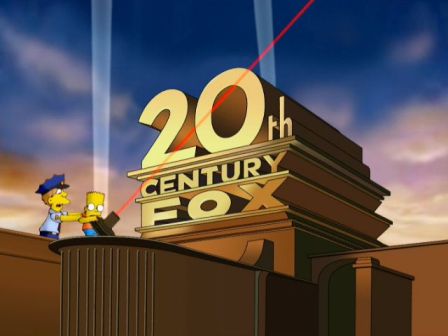 William Fox the founder of 20th Century Fox Films and the well known film producer is one of the owners of the '20th Century Fox Film' studios along side Joseph M. Scheneck and Darryl F. Zanunk. Due to the owners of the studio having such a huge difference in pasts and interests the films produced from this studio varies in genre.
An Independent production is when the artists have complete control over everything produced.
Distribution
Distribution is the launching of a certain media from the market place to the public. Film distributors can only distribute films if they have a film licence. Once the film is completed it is sent to the studio who then makes a licencing agreement with a distribution company who then decides on where to distribute the film.There are many ways to distribute a film which fit into two categories traditional and new distributing. Traditional ways of distributing a film is mainly through paperback adverts such as film posters and billboards, newer ways of distributing films is through digital adverts such as trailers online.


Film festivals are organised presentations of extended films usually in cinemas but can also be set outdoors. Film makers can sell their films to film festivals as a way of distributing their film. Despite film festivals being a distribution mechanism film makers tend to release their film when other distributors are not releasing their film to avoid competition. Avoiding competition means the film makers will earn more money. If a film maker cannot secure a distribution deal their film will not be distribution therefore they will not have a large audience who is aware of their film, moreover this means the film makers will not earn as much money from the lack of distribution.
Marketing
Marketing is how the film is promoted. Contrary to distribution, marketing promotes a film to the public whereas distribution relies more on connections in relation to the film.
Examples of films being marketed on everyday items:

Oblivion advertised on a bus

Never let me go advertised in a newspaper
Popular American films are marketed in different countries the same way as films in America however the text is in the language suitable for the country, despite this the adverts are still promoted on everyday items such as buses.

This is a well-known marketing strategy for big Hollywood films as it increases the audience size.
Exhibition
Audiences get to see films in a numerous amount of ways. For example a classic way of watching a film is seeing it in the cinemas, however technology has become advanced and people can watch films on their televisions, iPads, computers almost any type technology with the access to internet. A 'box office' film is referring to the theatre or the cinema where tickets can be reserved or brought. Box offices are useful to identify how successful a film is buy recognising how many tickets were sold at the box office.


Producers and directors retrieve the most money from a film made.
Box offices earn their money from three main factors: the tickets sold, the refreshments and the adverts posted in their cinema. Cinemas encourage the audience to watch films at the cinema instead of watching it at home by giving regular customers discounts and having schemes such as 'Orange Wednesday' where tickets are sold at 2 for 1. Ancillary Markets sells films that are not based in the cinema, for example Netflix is a world wide known ancillary marketer. This allows films to be successful without having an audience at the box office. 
BFI
The BFI stands for The British Film Industry, their aim is to educated the public about film and television and the effect it has on society. They plan to change the way people look at films and television and appreciate it more.


